
euspen’s international conference and exhibition provides a leading forum for industrialists and academics alike to review the best of world-wide industrial innovation, progressive research and technology developments. Delegates will gain an insight into the precision engineering and nanotechnology priorities of Europe’s leading industrial nation.
This event offers the possibility to see latest advances in traditional precision engineering fields such as metrology, ultra precision machining, additive and replication processes, precision mechatronic systems & control and precision cutting processes. Furthermore, topics will be addressed covering robotics and automation, precision design in large scale applications, applications of precision engineering in biomedical sciences, sustainability, digital manufacturing and precision engineering.
.
The local host for euspen‘s 26th International Conference and Exhibition is Prof. Adam Gaska, Kracow University of Technology.
The organising committee is formed by Kracow University of Technology, Faculty of Mechanical Engineering, Rzeszow University of Technology, and euspen HQ.



Themes and Call for Abstracts
26th International Conference submissions
Announcement & Call for Abstracts
Come and join your international peers and maintain a leading edge on technology, customers, partners and suppliers. Access the greatest minds in micro and nano research and development. Share knowledge and information and stimulate debates.
Themes
- Advances in Precision Engineering and Nanotechnologies
- Applications of Precision Engineering in Biomedical Sciences/Biotech Medical Devices
- Automation, Robotics, and Machine Learning
- Digital Manufacturing
- Large Scale Precision Engineering: design, metrology & applications
- Measuring Instruments and Machine Tools: Design and Performance
- Mechanical Manufacturing Processes
- Mechatronics, Control and Handling
- Metrology
- Non-Mechanical Manufacturing Processes
- Replication and Additive Manufacturing
- Sustainability in Precision Engineering
Submission of abstracts
Abstracts are expected to describe original work, previously unpublished and should indicate new and significant advances and their importance. Initially short abstracts comprising of approximately 300 words in length should be submitted online using the below links.
Following review of short abstracts, authors will be provided with instructions for submitting a paper of up to four A4 pages (2 or 4 pages). On acceptance of the paper, authors are notified of presentation mode (poster/oral). All papers accepted into the conference proceedings are included in Elsevier’s citation index and will also be indexed on to euspen’s Knowledge Base which is indexed via Google Scholar. The final decision on acceptance of all papers is made by the Editor and International Scientific Committee of the conference.
The invitation to submit an abstract does not constitute an offer to pay travel, accommodation or registration costs associated with the conference. Similarly, no speaker fee is paid to successful participants. All speakers must register for the conference and transfer registration fee. In specific cases the organising committee reserves the right to deviate from the standard procedure.
Key Dates
19th September 2025: Deadline for online short abstract submissions
28th September 2025: Notification of abstract acceptance to authors
12th January 2026: Deadline for online paper submissions
27th February 2026: Deadline for Scholarship Applications
6th March 2026: Notification of paper award (oral/poster)
Conference Fees
The conference delegate registration fee includes :-
- Free access to the welcome reception to be held on the evening of Monday 8th June 2026
- A full electronic copy of the proceedings on a euspen USB drive
- Free refreshments through-out the conference
- Free three course lunch on each of the conference days
- Access to all of the keynote and technical presentations held through-out the conference
- Access to the exhibitors drinks reception held on Wednesday 10th June 2026
* Please note Early Bird fees include an early registration discount of €65 and the discounted rate will expire on 11th April 2026.
Registration
Euspen events comply with international VAT/IVA/VAT MOSS rules and complies with the relevant Standard VAT rules dependent upon the Country hosting the event.
The euspen international conference and exhibition takes place in Krakow, Poland and as such the relevant Standard Poland VAT of 23% will be applied to all delegate registration invoices.
Select Credit Card if you would like to pay by credit card :-
Select Invoice if you would like to pay by invoice :-
- A valid Purchase Order (PO) number is required to guarantee payment.
- An administration fee of €30 will be applied.
- All invoices must be settled prior to attendance of the event. If the invoice remains outstanding at the point of attendance, the delegate will be required to pay the invoice via credit card before admittance.
- Your completed form should be sent to info@euspen.eu and an invoice will be sent to you manually.
Sponsors

Student Scholarships
Scholarships supported by Heidenhain GmbH are available for students or researchers registered at a recognised International Higher Education Institution.
Application Deadline: 27th February 2026

Exhibitor Drink Sponsor
Professional Instruments Company will be sponsoring the exhibitor drinks which will be held on Wednesday 11th June.

Conference Proceedings Sponsor
Renishaw will be sponsoring the conference proceedings for the 26th international conference.
The Precision Engineering community is quite small and the euspen annual event is a great way to make and maintain contact with world-leading experts in the field, many of whom offer highly relevant tutorial sessions at the conferences. We at Cranfield Precision specialise in the design and manufacture of high precision machine systems, it would be unthinkable for us not to take advantage of the technical program, networking and educational opportunities on offer at euspen conferences. Since around 2011, we have been exhibitors at the annual conference exhibition, we have found this to be an excellent way of making contact with new and existing customers. We can trace the initial contact made with many of our current and past customers back to the euspen conference and exhibition, so the cost of attending and exhibiting has paid for itself many times over.
With over 400 attendees focused on precision engineering, exhibiting at the Annual Conference & exhibition organised by euspen is vital to getting our message to the right people. The ultimate benefit to attending is the people you meet. Networking with industry experts willing to discuss ideas and offer suggestions to those difficult projects waiting for you back home. These conversations lead to treasured relationships with talented precision engineers you can consult when difficult questions arise.
Keynotes
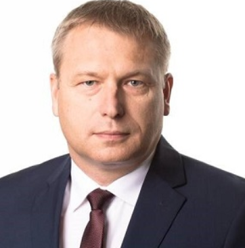
Prof. Adam Woźniak
Warsaw University of Technology, Poland
Machine tool metrology, industrial CT
All keynote details TBC,
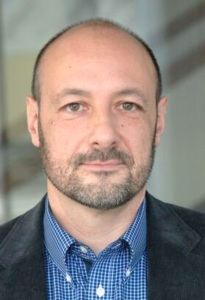
Prof. Dr.-Ing Michael Marxer, Eastern Switzerland University of Applied Sciences, Institute for Microtechnology and Photonics, Competence Centre for Production Metrology
Aperture Calibration at 0 °C: Metrological Challenges Beyond Established Standards
High-precision apertures are a key enabling element for radiometric measurements on Earth and in space, for example for determining the radiative power density of celestial bodies such as the Sun. Their calibration directly affects the reliability of climate monitoring, long-term solar observation, and space-based measurement systems. Despite their importance, aperture calibration is often treated as a well-established task—an assumption that quickly breaks down when moving beyond standard laboratory conditions.
This keynote reflects on practical experience gained from the manufacturing and calibration of high-precision apertures at the OST – Eastern Switzerland University of Applied Sciences, in close collaboration with RhySearch. A particular focus is placed on the calibration of apertures at 0 °C, rather than the conventional reference temperature of 20 °C. This shift introduces fundamental challenges related to thermal behavior, measurement uncertainty, traceability, and the validity of established metrological concepts.
Dedicated calibration procedures based on multisensor coordinate measuring systems were developed to achieve the lowest possible measurement uncertainty under these non-standard conditions. Different measurement strategies and sensor concepts are critically discussed, highlighting their strengths, limitations, and practical applicability. Special attention is given to the question of traceability at 0 °C, which proved to be one of the central challenges of the work.
Rather than presenting a single solution, this keynote aims to share lessons learned at the interface of ultra-precision manufacturing and production metrology. It highlights how metrological challenges evolve when measurement conditions deviate from established standards, and discusses the implications for future high-accuracy measurements in space instrumentation, radiometry, and climate observation.
Biography
Michael Marxer is Professor of Production Metrology at the OST – Eastern Switzerland University of Applied Sciences, where he leads the Production Metrology Group and serves as Head of the Production Metrology Measurement Laboratory in Buchs, Switzerland.
He studied Precision Engineering at the NTB Buchs (University of Applied Sciences Buchs) from 1993 to 1996. He received his doctorate from Friedrich-Alexander University Erlangen-Nuremberg under the supervision of Prof. Albert Weckenmann, with his research focusing on coordinate metrology, with particular emphasis on multisensor coordinate measuring systems and sensor development.
Following the merger of several universities into OST, Prof. Marxer took on responsibility for the SCS calibration laboratory (Swiss Calibration Service) and the STS testing laboratory (Swiss Testing Service) at OST, ensuring traceability and quality assurance for industrial metrology applications, including roughness metrology, which is offered as a dedicated calibration service.
He is President of CMTrain e.V., an association dedicated to education and training in coordinate metrology using blended learning concepts, and a member of the guideline committee VDI 2617 in Germany.
His professional interests include production metrology, multisensor coordinate metrology, sensor development, calibration and traceability, roughness metrology, and industrial measurement processes, with a strong focus on bridging academic research and industrial application.