
euspen is delighted to announce its third Special Interest Conference on Precision Engineering for Sustainability.
Precision machines have long been at the forefront of one industrial revolution after another to enable the turning of ideas into the economical production of physical objects. In all likelihood the emerging Sustainable Revolution could be the start of a new golden age for the planet, humanity, and precision engineering.
Whilst there is no shortage of renewable energy systems available at ever-decreasing costs, a concern is they are not evolving fast enough to help us economically transition to a low carbon economy.
The purpose of this conference is thus to bring together people from academia, industry, and government to share experiences with using precision engineering principles to help develop new ideas and manufacturing systems to reduce production and ownership costs related to realizing a global carbon neutral (or ideally negative) economy.
Areas of interest include automated precision production of components and systems ranging from manufacture of solar cells and panels to their installation and maintenance; to ever larger wind turbines on and offshore including in-situ manufacturing of ever larger elements; to energy storage systems from batteries to hydro power systems.
We are seeking contributions in Precision Engineering for Sustainability and their production in the following general categories, however these are not exclusive:-
1. Circular economy (Design for (re-)manufacturing and recycling)
2. Energy storage
3. Green hydrogen & machine measurement
4. Manufacturing for e-mobility
5. Manufacturing machine tool efficiency (energy efficiency)
6. Net-zero manufacturing
7. Non-hydrocarbon manufacturing
8. Renewable energy generating machines
9. Waste processing technologies
For each of these areas, how can production and quality be increased while lowering costs and increasing quality? Can precision production methods from other industries be of help for the topics above?
IOP JOURNAL – Special Edition



We are delighted to announce the IOP Journal will be running a Special Edition on papers submitted to this event. If you have been awarded an oral presentation, please submit a modified paper to the Journal. IOP have kindly waived publication fees for all invited submissions. Don’t miss out on this fantastic opportunity to have your paper published in this open-access Special Edition.
As a guide, authors must ensure that they comply with the following requirements in preparing their expanded conference paper for formal submission to this journal:
- The submission must conform to the scope of the journal and display scientific rigour as well as originality beyond previously published work in the field. You can check the scope on the journal homepage.
- The submission must be expanded to include new results and/or accompanying material to the earlier conference paper in compliance with the journal’s acceptance criteria, which you can find on the journal homepage. The expectation is that the submission includes at least 30% new and original material beyond what has previously been published.
- The submission must clearly disclose the earlier proceedings publication by providing a full reference to the conference paper in the introduction, including the Digital Object Identifier (DOI), and a complete summary of the additional technical contributions.
- The submission must have a different title and abstract to the earlier conference paper.
- The submission must be accompanied by a cover letter that discloses the earlier conference paper and specifies the additional results and/or material that have been included. This is critical information to enable our reviewers and editors to judge whether the proposed new technical contributions are sufficient to justify publication.
- The submission must comply with IOP Publishing’s data availability policy. Please note that this policy requires authors to include a data availability statement in their article.
Full guidance can be found here.
Special Issue: Sustainability Science and Technology link
Key Dates:
8th June 2026 : Short abstract submission deadline
13th July 2026 : Extended abstract submission deadline
24th August 2026 : Notification of presentation acceptance (oral/poster)
24th August 2026 : Registration opens
Registration Fees
*Student members fee is not inclusive of the networking dinner.
All speakers and presenters must register for the conference using the appropriate delegate fee.
Registration
Euspen events comply with international VAT/IVA/VAT MOSS rules. As such the relevant Standard VAT dependent upon the Country hosting the event.
The euspen SIC meeting on Precision Engineering for Sustainability takes place in Scotland, and as such the relevant Standard UK VAT of 20% will be applied to all delegate registration invoices.
Select Credit Card if you would like to pay by credit card :-
Select Invoice if you would like to pay by invoice :-
- A valid Purchase Order (PO) number is required to guarantee payment.
- An administration fee of £30 will be applied.
- All invoices must be settled prior to attendance of the event. If the invoice remains outstanding at the point of attendance, the delegate will be required to pay the invoice via credit card before admittance.
- Your completed form should be sent to info@euspen.eu and an invoice will be sent to you manually.
Submit an abstract for Precision Engineering for Sustainability 2026
Announcement & Call for Abstracts
Come and join your international peers and maintain a leading edge on technology, customers, partners and suppliers. Access the greatest minds in Precision Engineering for Sustainable Energy Systems research and development. Share knowledge and information and stimulate debates.
Themes :-
1. Energy storage
2. Renewable energy generating machines
3. Circular economy (Design for (re-)manufacturing and recycling)
4. Green hydrogen & machine measurement
5. Manufacturing machine tool efficiency (Energy efficiency)
6. Waste processing
7. Manufacturing for e-mobility
8. Net Zero manufacturing
Submissions
We are passionate about attracting everyone to this event. As such we are being flexible on your submission for this event and accepting different variations to encourage as many submissions as possible.
Short abstracts/Extended abstracts: Abstracts are expected to describe original work, previously unpublished and should indicate new and significant advances and their importance. Short abstracts should be around 300 – 400 words in length using the template provided. Extended abstracts can be 2 or 4 pages long and you should use the template provided.
PowerPoint slide(s): One/two slides which summarises your current research.
Position paper: A text that presents an arguable opinion about an issue (sustainability in PE) – typically that of the author or specified entity. Position papers are published in academia, and other domains.
The invitation to submit does not constitute an offer to pay travel, accommodation or registration costs associated with the conference. Similarly, no speaker fee is paid to successful participants. All speakers must register for the conference and transfer registration fee. In specific cases the organising committee reserves the right to deviate from the standard procedure.
Keynotes
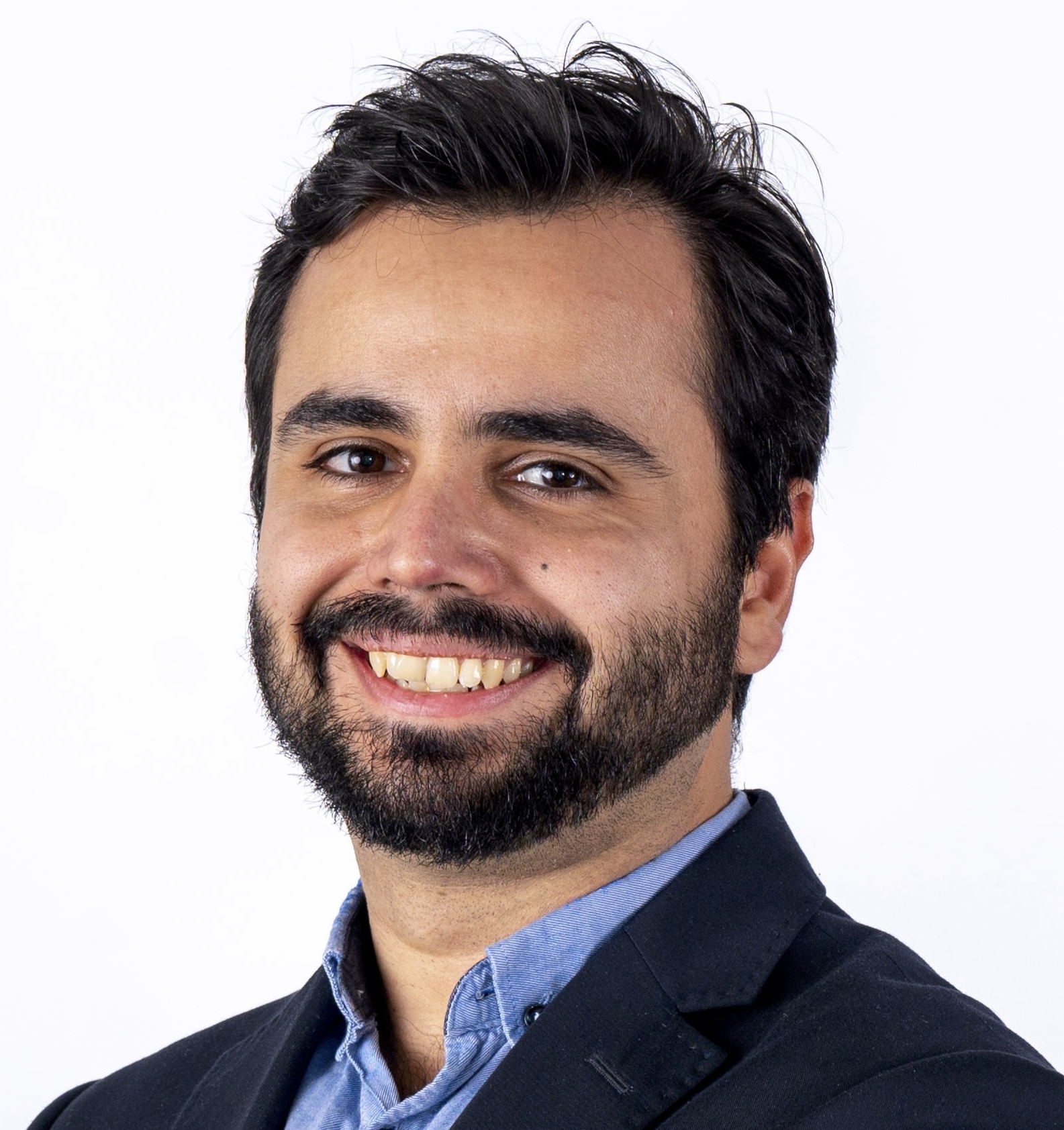
Laser as a digital key enabling tool for electric vehicle manufacturing
The rapid evolution of electric vehicle (EV) production over the past decade has placed manufacturing technologies at the center of industrial competitiveness. As mobility electrification accelerates across sectors—from automobiles to aerospace—new demands emerge for lighter structures, extended driving range, and faster charging capabilities. These shifts fundamentally reshape materials, component design, and production strategies. Compared to conventional combustion vehicles, EVs involve fewer but more specialized components, increasing the need for precision, flexibility, and adaptability in manufacturing. This transformation requires highly digitalized production environments capable of handling frequent model changes and diverse component geometries while maintaining reliability and efficiency. In this context, laser-based manufacturing has become a key enabling technology. Its versatility supports a wide range of applications, including welding of battery components and busbars, hairpin processing, electrode cutting and texturing, and composite material machining. Laser processes offer the precision, speed, and automation compatibility required for modern EV production lines. This talk highlights how lasers act as a “digital key” in enabling flexible, scalable, and intelligent manufacturing systems for electric vehicles. It provides an overview of relevant EV components, associated laser processes, and the growing importance of process digitalization and monitoring in achieving high-quality, efficient production.
Biography
Ali Gökhan Demir is a Professor of Manufacturing and Production Systems in the Department of Mechanical Engineering at Politecnico di Milano. He earned his PhD in Mechanical Engineering in 2014 in Politecnico di Milano in collaboration with the University of Cambridge. He conducts research at the SITEC – Laboratory for Laser Applications, focusing on laser-based manufacturing processes, with particular emphasis on light–material interaction across temporal, spatial, and wavelength domains. His work spans laser welding, micromachining, and additive manufacturing, with the aim of developing advanced processing solutions to enhance precision, processability, and the production of multi-material structures. Prof. Demir is the scientific coordinator of the LaserEMobility section of AITeM (Italian Manufacturing Association), dedicated to advancing laser technologies for electric vehicle manufacturing. He has authored over 200 peer-reviewed publications and holds several patents. His research has contributed to the development of laser-based manufacturing solutions for industries including automotive, electric mobility, electronics, energy, and aerospace. He currently serves as Associate Editor of Additive Manufacturing Letters and the ASME Journal of Micro and Nano-Manufacturing.
Small-Scale Renewables Incorporating Wind Turbine for Sustainable Communities: Empowering Local Energy Futures
As communities worldwide face the challenges of climate change, energy insecurity, and rising utility costs, small-scale renewable energy systems are emerging as practical and transformative solutions. This keynote explores how decentralized technologies – including solar photovoltaics, small wind turbines, and community energy storage – can strengthen local resilience while advancing environmental sustainability. The presentation will examine successful examples of community-led renewable energy initiatives that have reduced carbon emissions, improved energy access, and generated economic benefits at the local level. Attention will be given to the role of citizen participation, innovative financing models, and supportive leadership frameworks in enabling the adoption of small-scale renewables. By highlighting both opportunities and challenges, this keynote will demonstrate how sustainable communities can harness locally available renewable resources to create cleaner, more affordable, and more equitable energy systems. Attendees will gain insights into emerging technologies, best practices for implementation, and strategies for scaling community-based renewable energy solutions to support a just and sustainable energy transition.
Biography
Professor M. Emad Farrag is a Professor of Electrical Power Engineering at Glasgow Caledonian University, UK. He holds a PhD in Electrical Power and has extensive expertise in renewable energy integration, smart grids, energy storage, and sustainable power systems for community benefit. His research focuses on developing resilient, low-carbon energy solutions while leading large-scale international research, capacity-building, and community engagement projects. Professor Farrag has secured and managed multi-million-pound funded initiatives and has published extensively in electrical power engineering.
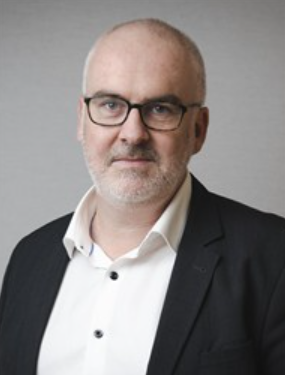
The Potential of Remanufacturing for the Sustainability Transition: Developments, Challenges and Prospects
Abstract:
Remanufacturing is often presented as a key strategy for reducing resource consumption and extending product lifetimes within circular manufacturing systems. However, its contribution to the sustainability transition depends on technical, economic and organisational factors that are frequently overlooked.
This keynote will review recent developments in remanufacturing research and industrial practice, examining both the potential and the challenges associated with wider implementation. Drawing on experiences from the establishment of Denmark’s national centre for remanufacturing, reManuFactory, the keynote address will explore how action-oriented research can be used to investigate remanufacturing from technical, environmental, economic and organisational perspectives, while discussing its role among the broader palette of circular strategies.
Biography:
Tim McAloone is Professor of Design for Sustainability at the Technical University of Denmark (DTU) and heads the Section for Design for Sustainability within the Department of Civil and Mechanical Engineering. His research focuses on manufacturing for sustainability, with particular interests in circular economy, remanufacturing, and absolute sustainability transition across manufacturing systems.
Working closely with industry, Tim develops and studies practical approaches to sustainability transition in manufacturing. He is Co-Lead of the DTU Centre for Absolute Sustainability and leads reManuFactory, Denmark’s national knowledge centre for remanufacturing, where researchers and industrial partners collaborate to explore the role of remanufacturing in future manufacturing systems.
An internationally recognised researcher and frequent keynote speaker, Tim has held leadership roles in several international organisations, including serving as President of the Design Society from 2019 to 2023. He received his PhD from Cranfield University, UK, in 1998.

Prof. Alex Slocum, MIT
Invited Speakers
Asst. Prof. Alistair Spiedel, University of Nottingham, UK
Integrating manufacturing and materials characterisation for waste reduction and value add
The transition towards net-zero manufacturing requires improvements to process efficiencies and reductions in waste/scrap generation. Both will benefit from improved understanding of manufacturing processes themselves. This talk will explore recent investigations at Nottingham into integrating precision electrochemical manufacturing processes with ambient, on-machine materials and defect characterisation to enable more sustainable manufacturing routes. Electrochemical processing allows high-precision machining, deposition, and surface modification without inputting heat or mechanical work into the material. Complementing these processes with rapid, non-destructive material mapping routines provides new opportunities to monitor microstructural state during manufacture, supporting informed process optimisation, improved quality, reduced scrap and targeted rework. Generally, closer integration of manufacturing and characterisation can enhance process efficiency, reduce waste generation and unlock greater value from manufactured components. The talk will present recent advances in these technologies and discuss their role in supporting more resource-efficient and sustainable precision engineering.
Biography
Dr Alistair Speidel is an Assistant Professor at the University of Nottingham, where his research focuses on sustainable precision engineering and advanced manufacturing technologies. His work integrates electrochemical manufacturing processes with innovative materials characterisation techniques to improve manufacturing performance, reduce waste and enhance process understanding. His research includes electrochemical and electrophysical machining, surface processing and the development of ambient, non-destructive microstructure mapping methods for in-process and on-machine characterisation. These complementary research areas aim to enable more resource-efficient manufacturing by combining precision processing with real-time (on-machine) insight into material behaviour. Alistair is a cofounder of TextureJet that commercialises electrochemical surface processing, and he collaborates with other industrial and academic partners to translate technologies into practical manufacturing solutions, with applications ranging from high-value engineering sectors to emerging sustainable manufacturing and circular economy challenges.
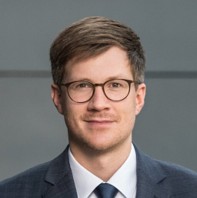
Dr Tim Herrig, RWTH Aachen, Germany
Challenges and Approaches in the Forming of Metallic Bipolar Plates for PEM Fuel Cells
The metallic bipolar plate is a central component of PEM fuel cells and a key enabler of climate-neutral mobility. It is increasingly relevant not only for automotive and heavy-duty transport, but prospectively also for maritime and aviation applications. Manufacturing these plates by forming, however, remains demanding: the forming of very thin metal foils gives rise to effects such as local thinning and springback, which directly affect component quality and process reliability.
While various strategies to address these effects may be adopted from similar formed products, they cannot simply be transferred one-to-one and involve trade-offs between formability, economic efficiency, and tooling effort. Since the manufacturing of forming tools is highly costly, iterative trial-and-error approaches are economically not feasible. Reliable process design therefore depends on an accurate understanding of material behavior, on simulation methods capable of capturing failure and springback, and on suitable tool manufacturing and quality assurance concepts, each of which reaches its limits as foil thicknesses decrease.
Against this background, the central challenges of bipolar plate forming are examined along the relevant fields of action, from material characterization and numerical process design through tool manufacturing to quality monitoring. The aim is to outline approaches toward an economical, robust, and quality-assured production of metallic bipolar plates.
Biography
Dr.-Ing. Tim Herrig is Head of Department EDM/ECM Processes and Forming Technologies at the Manufacturing Technology Institute (MTI) of RWTH Aachen University, where he has been active since 2014. In this role, he leads a team of up to 25 researchers and engineers, overseeing the strategic development and execution of research projects in the field of manufacturing technology.
His research spans precision manufacturing with a strong focus on forming technology, including the manufacturing of bipolar plates for fuel cell applications in aviation. Further expertise lies in EDM/ECM processes, the latter being also the topic of his doctoral thesis on electrochemical wire cutting, which he completed at RWTH Aachen University with distinction.
He has authored over 100 peer-reviewed publications in the field of manufacturing technology. He holds a master’s degree in mechanical and production engineering from RWTH Aachen University and was awarded the Borchers Medal of RWTH Aachen for outstanding academic achievement.
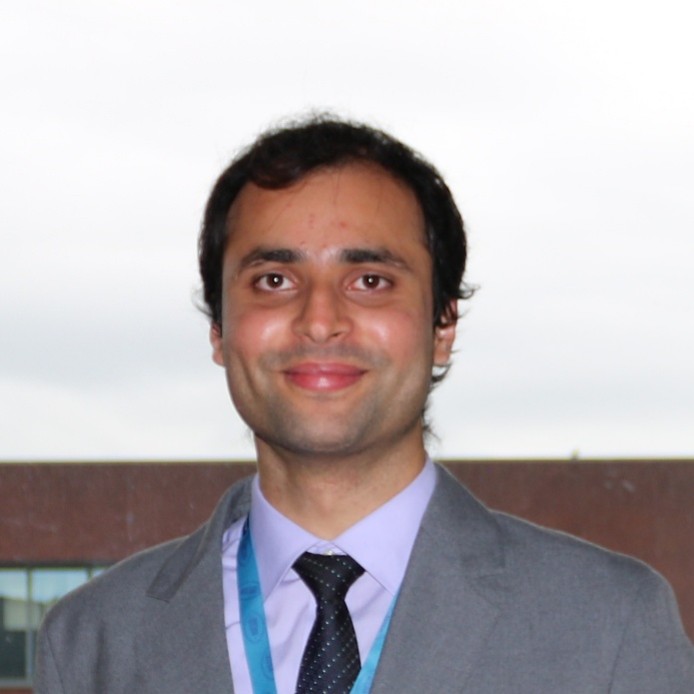
Dr. ir. Muhammad Hazak Arshad, KU Leuven, Belgium
Towards carbon and environmental performance evaluation of multiphysical manufacturing processes: Insights from hybrid laser-ECM as a use-case
The transition towards net-zero manufacturing requires processes to be evaluated not only with machining performance metrics but also the corresponding carbon footprint, resource consumption and broader environmental impact. This is particularly challenging for multiphysical manufacturing processes where complementary process energies interact simultaneously or sequentially at the machining zone, making sustainability evaluation more complex than traditional manufacturing technologies. Current process investigations are mainly focused on machining performance and productivity, while methodologies for assessing carbon footprint, resource consumption, waste streams and environmental impact are still limited.
This talk introduces a framework for carbon and environmental performance assessment of multiphysical manufacturing processes that integrates machining performance metrics with indicators related to energy consumption, resource utilisation, electrolytic waste and associated environmental impact. The aim is to support the development and benchmarking of multiphysical manufacturing technologies that contribute to net-zero transition, while maintaining high process performance. For this, hybrid laser-electrochemical machining (LECM) is presented as a representative case study with ECM as the baseline. LECM is known to enhance reaction kinetics, machining localisation and surface integrity by synergistically combining microsecond-pulsed electrochemical and nanosecond-pulsed laser process energies, which enable machining using pH-neutral electrolytes. These characteristics illustrate both the opportunities and challenges of assessing sustainability in multiphysical manufacturing processes, where process-material interactions not only influence machining performance but also energy usage, process emissions and generated electrolytic waste.
Biography
Dr. ir. Muhammad Hazak Arshad is currently working as a Postdoctoral Researcher (VLAIO fellow) at the Dept. of Mechanical Engineering at KU Leuven since Oct 2024. He is also serving as a lecturer at KU Leuven campus Geel and project manager for the MSCA-DN ‘MicroMan4Health’. He obtained his PhD in Mechanical Engineering from KU Leuven in 2024, funded by a FWO senior research project, during which he also worked as a visiting researcher at the Dept. of Precision Engineering at the University of Tokyo, JP in Nov 2022. Prior to this, he received his MSc in Mechanical Engineering from KU Leuven in 2020 and did his master’s thesis at the Micro- & Precision Engineering lab. He obtained his BEng. in Mechanical Engineering in 2016 from NUST, PK where his final year project was sponsored by Weatherford® and thereafter worked in the process and energy industries for ~2 years. He has 6+ years of research experience in various aspects of non-conventional manufacturing technologies with a focus on process hybridisation, advanced material processing and process monitoring.
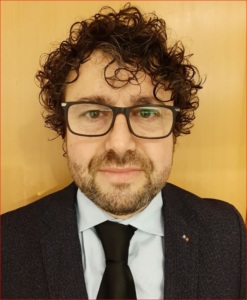
Dr. Ali Koruk, Bosal, Belgium
Specialising in net-zero manufacturing for heat exchangers/diffusers
Heat exchangers and diffusers and exhaust components are key components in the low-emission energy sector and the automotive industry. Their production can be challenging, as they often involve thin-walled structures and multiple materials that must be joined with high precision while maintaining quality, efficiency, and cost competitiveness. This presentation explores how net-zero manufacturing principles can support the production of heat exchangers and diffusers. Particular attention is given to additively manufactured components and their comparison with conventional manufacturing processes such as welding and casting, as well as to multimaterial designs that combine different metals to improve thermal performance, reduce weight, and enhance durability.
The talk highlights advanced manufacturing technologies such as laser welding, wire-based laser metal deposition (LMD), and laser powder bed fusion (LPBF). These technologies enable faster prototyping, reduced dependence on minimum order quantities, lower CO₂ emissions, and significant savings in design, tooling, and production costs. They also support the precise joining of dissimilar materials while reducing distortion and material waste compared with conventional manufacturing methods. In addition, the presentation discusses how additive manufacturing can complement existing production processes to achieve first-time-right, zero-defect manufacturing while lowering energy consumption and scrap rates. Drawing on both industrial experience and industry–academia collaboration, the talk shares practical insights into the opportunities and challenges of scaling multimaterial heat exchanger and diffuser manufacturing as well as automotive exhaust components as part of the broader transition to net-zero industrial production.
Biography
Dr. Ali Koruk, EWE, is a Process Engineer at Bosal International, based in Lummen, Belgium, where he supports Bosal process and manufacturing engineering across multiple plants in Turkey, Czech Republic, Brazil, Ukraine, the Netherlands, Mexico, USA. His work focuses on welding process engineering (TIG, MIG/MAG, projection, canning), tooling and capacity planning, and cross-functional coordination with OEM and supplier partners on automotive exhaust and heat-exchanger programs. He is actively engaged with the international welding research community through IIW, KU Leuven, and the Belgian Welding Institute (BIL), and participates in applied research on advanced manufacturing processes including WAAM/DED-Arc and laser welding, LPBF with a focus on translating research into net-zero-aligned industrial practice.