
Workshops
Monday 8th June 2026
Attendance to euspen‘s 2026 workshops are €25 per workshop.
Workshop 1: Application of Digital-Metrological Twins for emerging measurement technology in advanced manufacturing
Monday 8th June 2026
University of Krakow, Room tbc
Time: 14:00-17:00
The workshop lead is Dr. Walter Knulst from VSL (ADAM’s WP1 leader) and Guido Tosello, PhD Associate Professor, Head of Studies Materials and Manufacturing Engineering, Technical University of Denmark
Application of Digital-Metrological Twins for emerging measurement technology in advanced manufacturing
A Joint Research Project within the European Partnership on Metrology.
The project 23IND12 ADAM has received funding from the European Partnership on Metrology, co-financed from the European Union’s Horizon Europe Research and Innovation Programme and by the Participating States.
Funded by the European Union. Views and opinions expressed are however those of the author(s) only and do not necessarily reflect those of the European Union or EURAMET. Neither the European Union nor the granting authority can be held responsible for them.
Please visit their website for more information: Home – ADAM

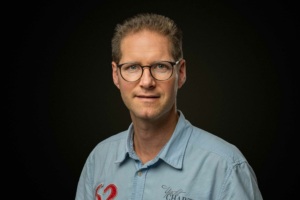
Dr. Walter Knulst from VSL
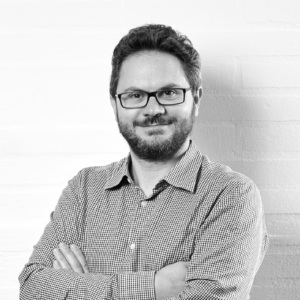
Guido Tosello, PhD, Associate Professor, Head of Studies Materials and Manufacturing Engineering, Technical University of Denmark
Workshop 2: Virtual laboratories enabling precision robotic systems
Monday 8th June 2026
University of Krakow, Room tbc
Time: 14:00-17:00
The workshop lead is by Prof. Andreas Archenti, Associate Prof. Toru Kisaki and Assistant Prof. Saul Heredia
Modern robotic systems are increasingly expected to operate with high precision while maintaining continuous and reliable interaction with their surroundings, including in safety‑critical and harsh environments. Traditionally, robots were deployed in tasks involving minimal environmental contact, such as material handling, assembly, or painting. Today, however, articulated robots are valued for their flexibility, affordability, and expansive workspace, making them central to contact applications. At the same time, the increasing complexity of these systems calls for new ways to design, monitor, and interact with robots through advanced virtual environments.
This workshop highlights the transformative role of robotics across a broad range of application areas, from biomedical engineering and scientific exploration to precision manufacturing, including robotic machining. In medicine, robotics enables high-levels of precision in surgery, diagnostics, and rehabilitation. In scientific and industrial settings, robotic systems support tasks that span from micro‑scale manipulation to large‑scale environmental research, expanding the boundaries of what can be measured, controlled, and automated with high accuracy. These developments are increasingly supported by virtual environments that provide a unified space for integrating sensing, control, and analysis across applications.
A particular focus will be placed on how Digital Twins, simulation environments, and virtual laboratories can be used to support the development, calibration, optimization, and validation of robotic systems well before they are deployed in real‑world conditions. These virtual tools allow researchers and engineers to test performance, evaluate control strategies, and analyze uncertainties or failure modes in safe, cost‑efficient, and fully configurable environments. This approach reduces development time, improves reliability, and supports repeatable experimentation that would otherwise be impractical or impossible.
Through presentations and demonstrations, participants will explore how virtual environments and physical robotic systems can work together to accelerate innovation in biomedical engineering, scientific experimentation, and precision manufacturing. Special attention will be given to how virtual laboratories enable shared research infrastructures, connecting distributed robotic platforms, simulation tools, sensing frameworks, and experimental workflows within unified digital ecosystems.
This session aims to bring together professionals, researchers, and enthusiasts from diverse fields. By emphasizing collaborative opportunities in virtual‑reality simulation, precision engineering and metrology, manufacturing, autonomous systems, and robotics‑enabled biomedical technologies, the workshop will demonstrate how virtual laboratories are enabling the future of precision robotic systems at the intersection of engineering, science, and medicine, supporting new paradigms of remote collaboration, knowledge transfer, and cross-site experimentation.
Intended audience:
This workshop is designed for academics, industry professionals, and innovators working in precision engineering and metrology. Whether your focus is fundamental research, the development of advanced medical technologies, or high‑precision manufacturing, the workshop will offer valuable insights into state‑of‑the‑art robotics, calibration methodologies, and virtual experimentation frameworks. Together, these tools are shaping the next generation of robotics‑enabled biomedical and precision applications.
Learning outcomes:
By the end of this workshop, participants will be able to:
- Understand the key principles of precision and accuracy in robotic systems, and explain how these factors influence performance in contact applications.
- Identify and apply calibration techniques to improve robotics systems performance.
- Explore and evaluate the role of virtual environments, digital twins, and virtual laboratories in supporting the development, validation, and collaborative use of robotic systems for biomedical and precision engineering applications.
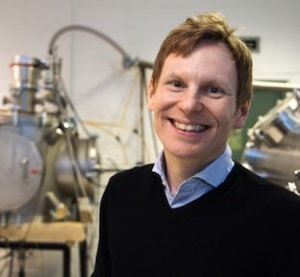
Professor Andreas Archenti is actively engaged in precision-driven research within the area of machinery reliability and performance. Since 2018, he has held the position of Chair Professor in Industrial Dependability with a particular emphasis on Precision Engineering, Metrology, and Analytics at KTH Royal Institute of Technology. He earned his M.S. in Mechanical Engineering with a focus on Mechatronics in 2007 and completed his PhD in Machine and Process Technology in 2011. In 2014, he was appointed as a docent in Precision Manufacturing and Metrology at KTH.

Toru Kizaki is an Associate Professor in the Department of Mechanical Engineering at The University of Tokyo, a position he has held since 2026. He received his M.Sc. in Mechanical Engineering in 2012 and his Ph.D. in Mechanical Engineering in 2015, both from The University of Tokyo. His research focuses on machine tools, error prediction, and compensation, with particular emphasis on multimodal error compensation encompassing thermal and dynamic errors. He has developed large-scale sensor arrays for accurate error compensation. His current work explores precision robotics-based machining processes to support flexible and fully automated manufacturing with the aid of virtual laboratory environments.

Saul Heredia is an Assistant Professor at the Harada Laboratory, Department of Medicine, The University of Tokyo, since 2023. He received his M.Sc. in Computer Science and Engineering in 2018 and his PhD in Mechanical Engineering in 2020. His research focuses on virtual environments, digital twins, and robotics for precision applications, with particular emphasis on robotic surgery and laboratory automation. He has experience in developing high-fidelity virtual reality simulation systems, including his work as an engineer at Sony Group Corporation from 2020 to 2023. His current work explores the integration of virtual laboratories, robotics, and artificial intelligence to support the calibration, validation, and reliable operation of precision robotic systems.